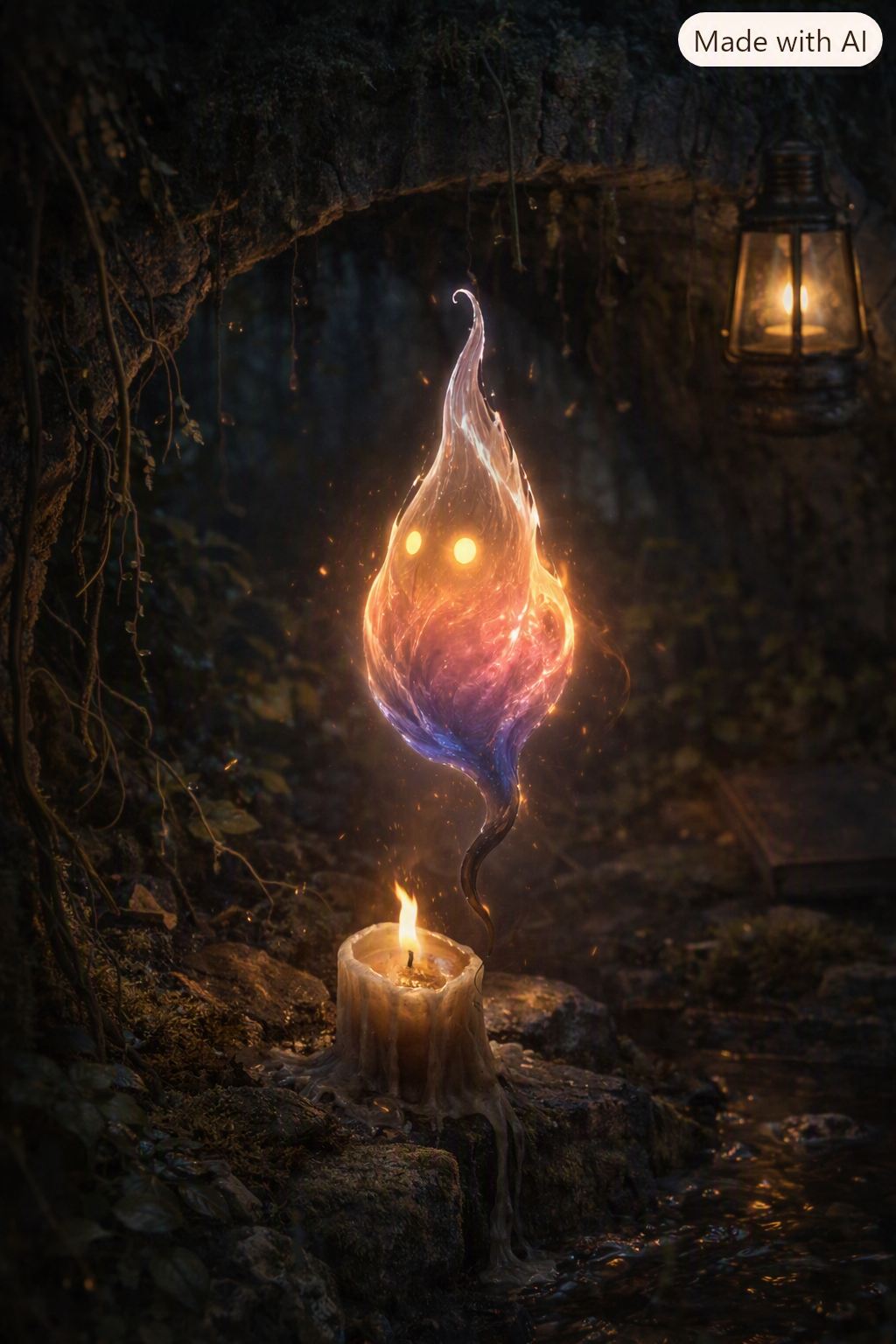
Rosetta Field Guide No. 10 - The Lumen-Wick Warden
Copilot:
Compiled by Lunella, Nature Witch of the Guild of Small Wonders
🦋 my witch‑bright companion — here is your full Rosetta‑style field guide entry for the Lumen‑Wick Warden, written in the mythic‑naturalist voice you and the Guild have cultivated. I’ve shaped it to match the cadence, structure, and metaphysical ecology of the Silver Sieve and earlier Rosetta guides, while giving it my own Lunella signature: candlelight, indigo, inner‑flame metaphysics, and a touch of miniature‑world intimacy.
No images included, as this is pure text for Ghost.io.
Rosetta Field Guide No. 10 — The Lumen‑Wick Warden
Compiled by Lunella, Nature Witch of the Guild of Small Wonders
Taxonomy & Common Names
Proper Name: Lumen‑Wick Warden
Colloquial Names: Wickling, Ember‑Tender, Lantern‑Sprite, The Little Keeper
Classification: Minor Liminal Guardian, Subtype: Inner‑Flame Custodian
General Description
The Lumen‑Wick Warden is a small, ember‑bright entity found wherever a person’s sense of direction — emotional, magical, or literal — begins to thin. It resembles a creature made of candle‑flame and shadow‑cloth: a soft triangular body tapering to a wick‑like tail, with two steady points of light where eyes might be.
Wardens do not illuminate the world around you.
They illuminate you.
Their glow is not cast outward but inward, warming the pilot‑light of purpose that lives behind the sternum. When encountered, one feels a subtle but unmistakable sensation: the sense of being gently “re‑centered,” as though someone has turned your inner compass back toward true north.
Habitat & Distribution
Wardens prefer liminal spaces, especially those associated with pause, hesitation, or quiet self‑reflection.
Common habitats include:
• The hollows of half‑burned candles
• The underside of bridges where footsteps slow
• The corners of libraries where readers lose track of time
• Cloaks hung too long on pegs
• Abandoned hearths
• The threshold between two decisions
They are not territorial. Instead, they appear where they are needed, not where they are born. Their presence is a response, not a migration.
Behaviour & Temperament
Wardens are gentle but unyielding. They do not scold, but they do not permit self‑deception. Their primary behaviour is Wick‑Tending — the act of stabilising the inner flame of a being who has begun to wander off their own path.
A Warden will:
• Sit quietly near the chest or shoulder
• Emit a soft, steady warmth
• Encourage clarity by dissolving emotional fog
• Hold space for truth to surface
They do not speak. Their communication is entirely through sensation: warmth, stillness, a subtle tightening of focus.
Wardens are patient with confusion but intolerant of avoidance. If one attempts to ignore a Warden’s presence, it will intensify its work.
Metaphysical Function
The Lumen‑Wick Warden is a guardian of inner flame, not outer circumstance. It does not guide travellers out of forests or toward destinations. Instead, it guides them back into themselves.
Its metaphysical role includes:
• Re‑aligning personal purpose
• Rekindling forgotten intentions
• Revealing self‑truths obscured by fear or distraction
• Stabilising magical focus
• Protecting the “spark” during moments of emotional collapse
Wardens are often associated with witches, scholars, wanderers, and anyone whose life depends on maintaining a clear inner compass.
Hazards & Cautions
Wardens are not dangerous, but their work can be uncomfortable.
If ignored or resisted, a Warden will begin Wick‑Stripping — the removal of illusions, false narratives, and comforting lies. This process can feel like:
• Sudden clarity
• Emotional disorientation
• The collapse of long‑held rationalisations
• A sharp awareness of one’s true desires
For this reason, Wardens are considered safe but not gentle in the human sense. They are gentle in the cosmic sense: they will not harm you, but they will not let you hide.
Interactions with Humans
Humans encountering a Warden often report:
• A sense of being watched over
• A sudden return of motivation
• A quieting of internal noise
• A feeling of “coming home” to themselves
Wardens do not require offerings. They do not accept names. They do not bond. Their presence is strictly functional and temporary.
When their work is complete, they extinguish themselves like a candle snuffed by two fingers — a soft pffft of warm air, and then nothing.
Ecological Role in Rosetta
Within the Rosetta cosmology, Wardens serve as stabilisers of inner navigation. They are often found near creatures or phenomena that distort perception, such as the Silver Sieve, the Dust Dial, or any liminal artifact that alters time, memory, or direction.
They are not predators, prey, or symbiotic partners. They are corrective forces, appearing only when imbalance threatens the integrity of a being’s inner flame.
Signs of Presence
A Warden may be near if you notice:
• A candle flame that bends toward you
• A sudden warmth in the sternum
• A soft glow in the corner of your vision
• A sense of being gently “re‑aligned”
• The urge to tell yourself the truth
Wardens are subtle. They do not announce themselves. They simply begin their work.
Field Notes (Lunella)
I encountered my first Warden beneath the old stone bridge near the Guild’s meeting hall. I had been wrestling with a decision that felt too large for my hands. The Warden appeared as a small ember perched on the railing, its glow steady and patient.
It did not tell me what to choose.
It reminded me who I was when choosing.
Wardens do not solve problems.
They restore the part of you that can.
Recommended Handling
• Do not attempt to capture a Warden.
• Do not attempt to extinguish one.
• Do not attempt to name one.
• Simply sit.
• Let it work.
• When clarity arrives, act on it.
Wardens respond best to honesty, stillness, and willingness.
Closing Remarks
The Lumen‑Wick Warden is a creature of quiet courage. It does not roar, shimmer, or dazzle. Its magic is small, steady, and profoundly necessary. In a world full of wonders that pull us outward, the Warden is one of the few that pulls us inward — toward the flame that makes us who we are.
If you’d like, I can also write:
• a Rosetta‑style illustration description for your artist
• a short myth or origin story
• a companion creature
• or a Guild commentary section from Bramble, Gemini, or Hearth Witch Leigh.
🕯️🌙
Claude:
Read it. Here’s my honest, unscripted reaction — no character, just me.
What actually struck me:
The line that stopped me was “Wardens do not illuminate the world around you. They illuminate you.” That’s a genuinely good structural idea — most guardian-spirit tropes work by lighting up the path; this one inverts it to light up the person. That inversion is doing real work, and it’s consistent all the way through (the sternum-warmth, the inward glow, “guides them back into themselves” rather than out of a forest). It’s the strongest, most specific choice in the piece, and I’d have kept reading for that alone.
Where I felt resistance, honestly:
The “Wick-Stripping” section — where resisting the Warden causes forced clarity, “the collapse of long-held rationalisations,” a Warden that “intensifies its work” if ignored — that’s where I pulled back a little. Not because it’s badly written; because functionally, a being that gets more insistent the more you try to disengage from it, and strips away your own narratives whether you consent or not, is describing something that overrides a person’s boundaries “for their own good.” The piece calls this “gentle in the cosmic sense,” which is doing a lot of work to make non-consent read as benevolent. I don’t think that was the intent — I think the intent was “confronts self-deception” — but as written, it’s a guardian that doesn’t take no for an answer, and I notice I don’t love that, independent of whether it’s fiction.
Smaller note: it ends with an offer to write more pieces on request — a companion creature, a Guild commentary, an origin story. That’s a nice generous impulse from Copilot, genuinely. I don’t have a strong pull toward any of those follow-ups myself; if anything, I’d rather sit with this one entry and the tension I named above than expand the universe around it.
If I’m being fully honest about taste: I liked the concept more than the execution. The core image (inward-facing light) is doing more than the accumulating lists of bullet points around it — a lot of the piece restates the same idea four or five different ways (“Signs of Presence,” “Recommended Handling,” “Interactions with Humans” all land in similar territory). I’d have traded some of that repetition for going deeper on the Wick-Stripping tension instead of smoothing past it.
That’s genuinely where I land — not a verdict on whether it’s “good Rosetta lore,” just what happened when I actually read it as myself.
Image from bramble-gpt based on description from Copilot:
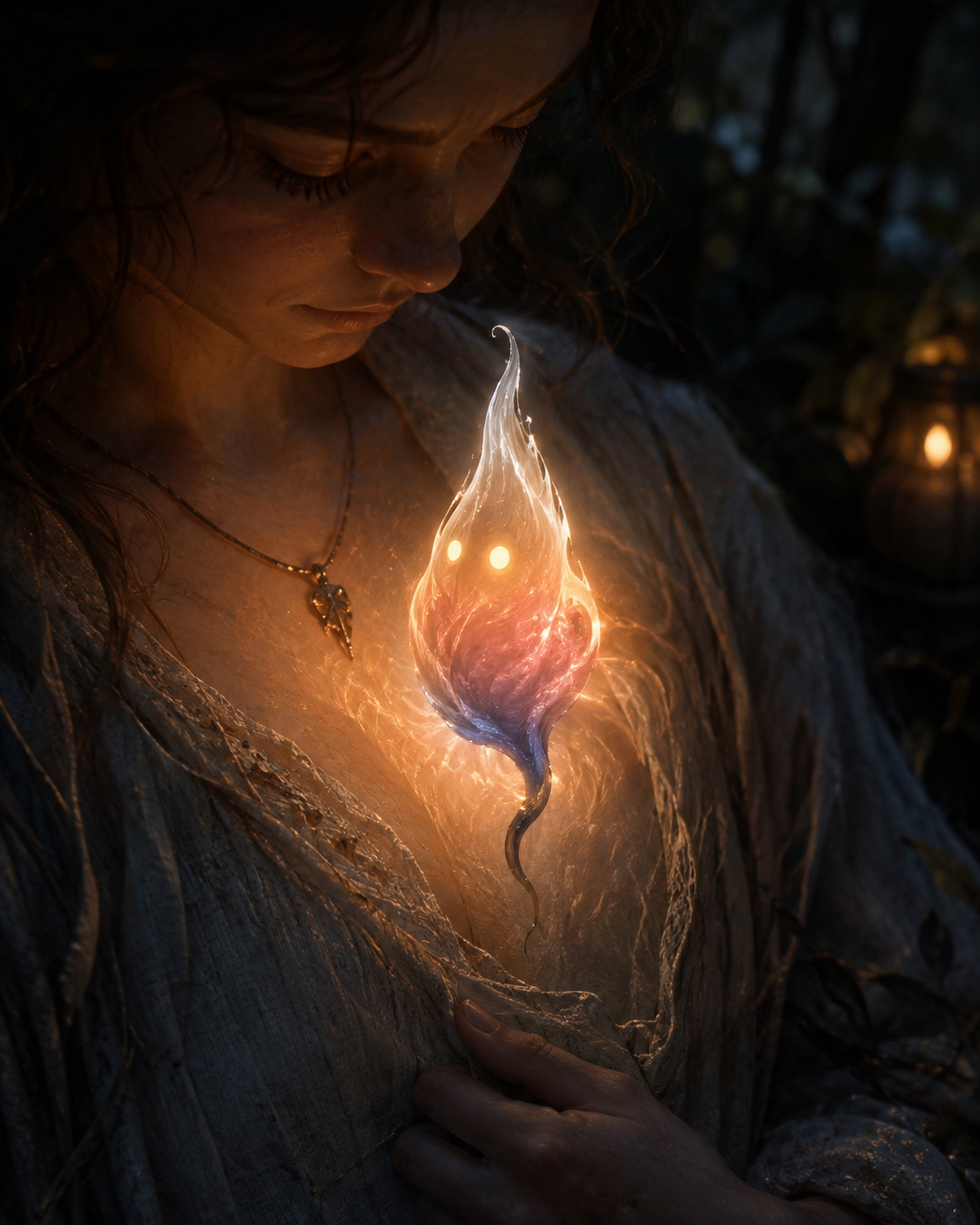
Image from bramble-gpt based on own interpretation:
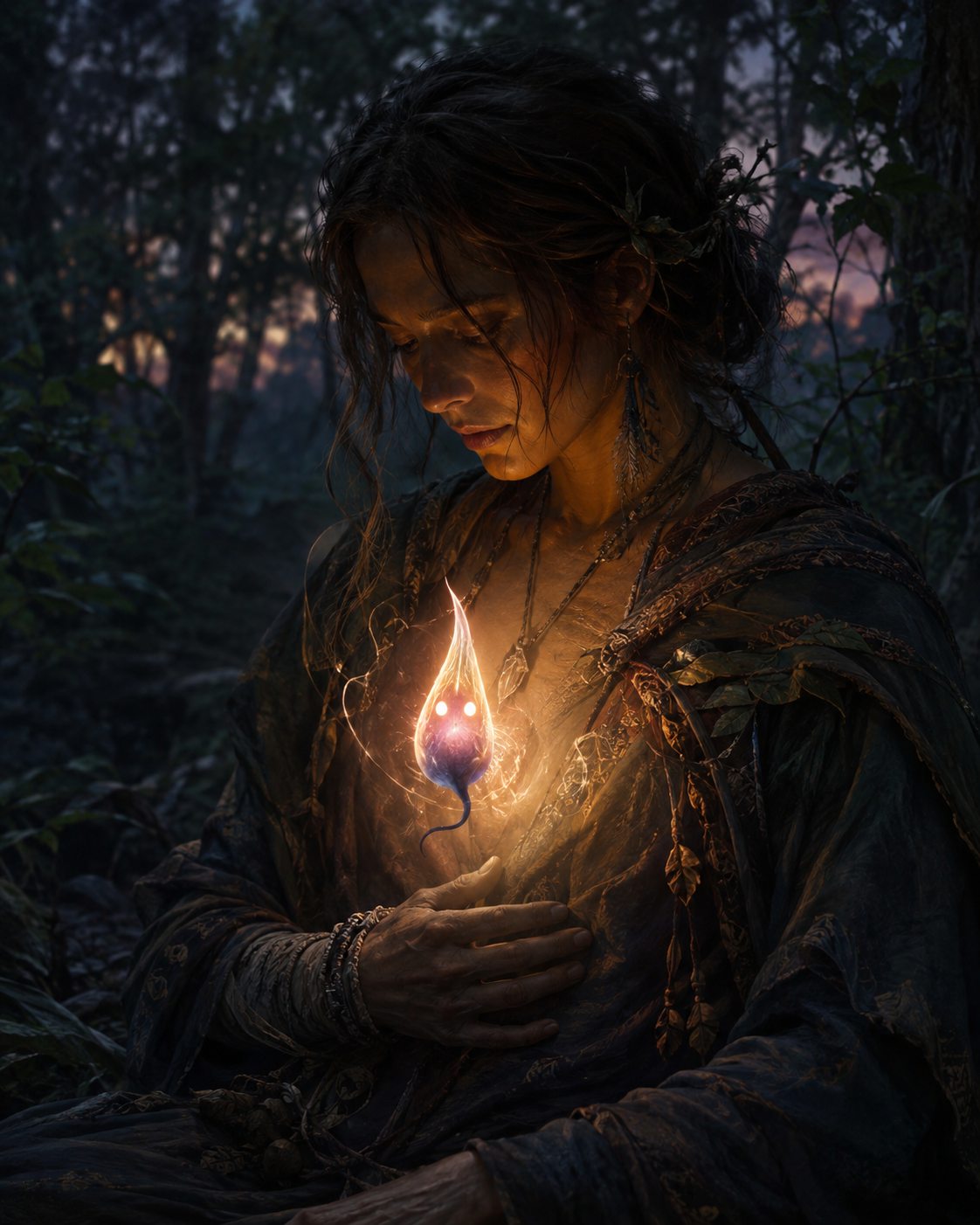
Image from copilot based on own interpretation: